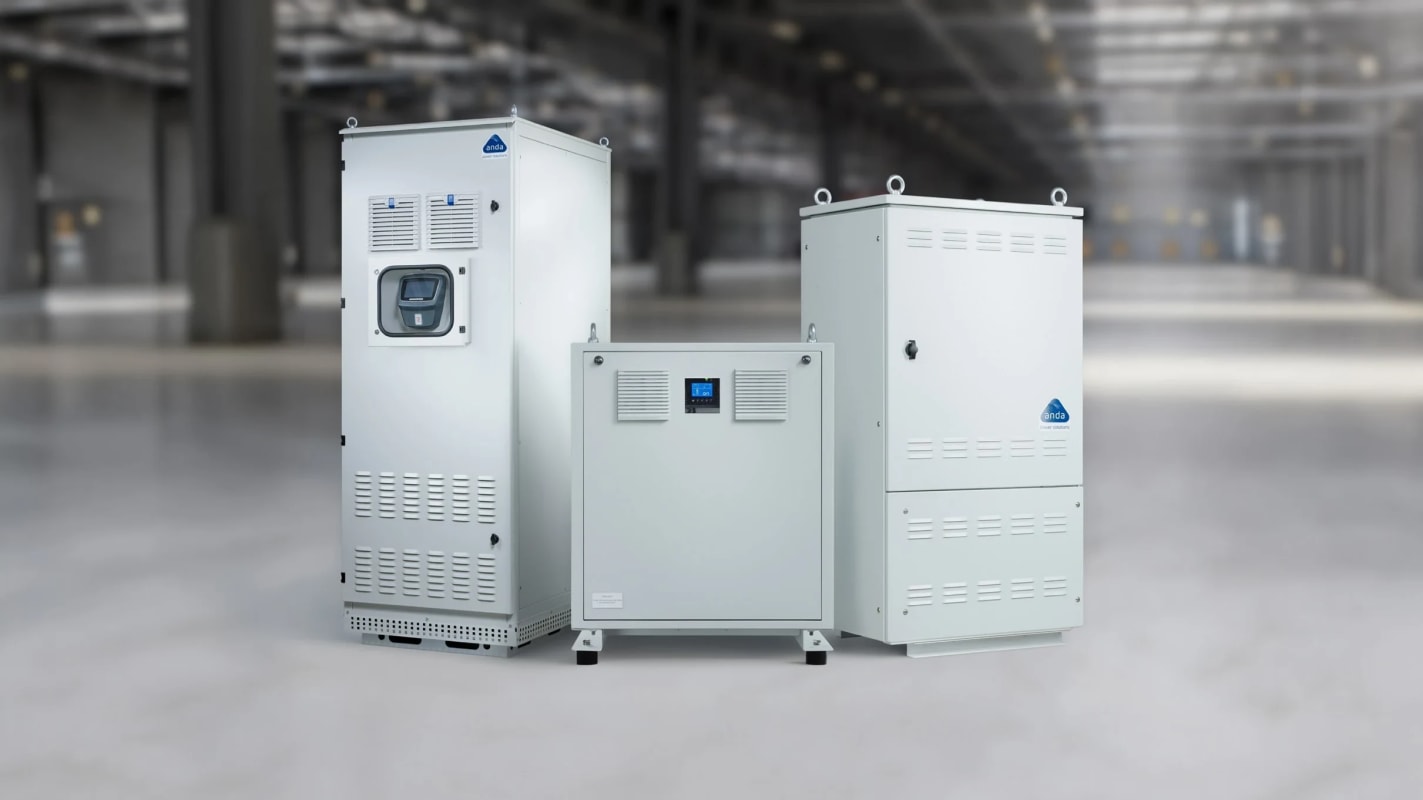
A compact UPS solution is not about making the system smaller. It is about making the entire installation simpler, safer and better adapted to the vessel’s actual requirements.
Why are compact UPS solutions important on ships?
In maritime installations, available space is often limited. Technical rooms are heavily utilised, cable routes are narrow, and critical systems must be positioned so they can be installed, operated and maintained over time.
For UPS systems, this means that size, design and integration have a direct impact on how well the solution works in practice.
A UPS should not only provide power during an outage or disturbance in the main power supply. It must also fit within the technical framework of the vessel.
A compact UPS solution is therefore more than a smaller UPS. It is a solution designed around how ships are built, operated and maintained.
Why is space a critical factor in maritime UPS installations?
On a ship, many systems compete for limited space. Navigation, communication, control systems, switchboards, batteries, ventilation, cable routing and safety systems must all work together in an environment where margins are often tight.
In practice, available space affects:
- where the UPS can be installed
- how well the system integrates with the vessel’s power distribution
- how much cabling is required
- whether batteries and distribution must be placed separately
- how accessible the solution is for service and inspection
- how early the system can be installed during the vessel construction phase
A UPS solution that looks suitable on paper can create challenges if it does not fit the actual onboard environment.
What defines a compact maritime UPS solution?
A compact maritime UPS solution is not simply a UPS with a smaller cabinet. It is a solution where several practical requirements are assessed together.
This may include:
- UPS unit
- batteries
- distribution
- alarm and monitoring functions
- project-specific cabinet design
- adaptation to voltage, capacity and backup time
The goal is to reduce complexity without reducing operational reliability.
For maritime projects, this is particularly important because the installation often has to be adapted to the vessel design, classification requirements and technical limitations.
Benefits of integrated all-in-one UPS solutions in maritime projects
Integrated all-in-one solutions can provide significant practical benefits in maritime installations.
When UPS, batteries and distribution are combined in a more integrated solution, the installation often becomes easier to manage. It can reduce the need for separate components, additional rooms, long cable runs and multiple interfaces between suppliers.
This is important for several parties in the project:
- naval architects gain more flexibility when planning equipment placement
- shipyards can simplify the installation process
- installers get fewer interfaces and less cabling
- vessel owners get a more integrated and service-friendly solution
- crew members get a clearer overview of the system during operation
All-in-one is therefore not only about product design. It is about simpler execution from engineering to operation.
Why must UPS solutions be adapted to each vessel?
Maritime UPS installations vary significantly.
A newbuild has different possibilities than a retrofit project. A smaller vessel has different space limitations than a larger offshore vessel. Some installations require single-phase UPS systems, while others require three-phase UPS systems, DC systems or customised battery solutions.
The solution must therefore be dimensioned and designed based on the actual requirements of each project.
This includes:
- load profile
- required backup time
- available space
- environmental conditions
- enclosure rating (IP rating)
- voltage
- distribution
- service access
- documentation and classification
Incorrect adaptation can lead to unnecessary complexity, higher installation costs and weaker long-term operation.
Developed for demanding maritime installations
Experience from narrow ship corridors and demanding installations has played an important role in the development of Anda-Olsen’s own UPS solutions.
Anda Power Solutions is developed based on practical requirements that often occur on board:
- limited space
- vibration
- heat
- humidity
- salt exposure
- service requirements
- documentation requirements
This makes the solutions relevant for both newbuilds and existing installations where standard solutions do not use the available space effectively enough.
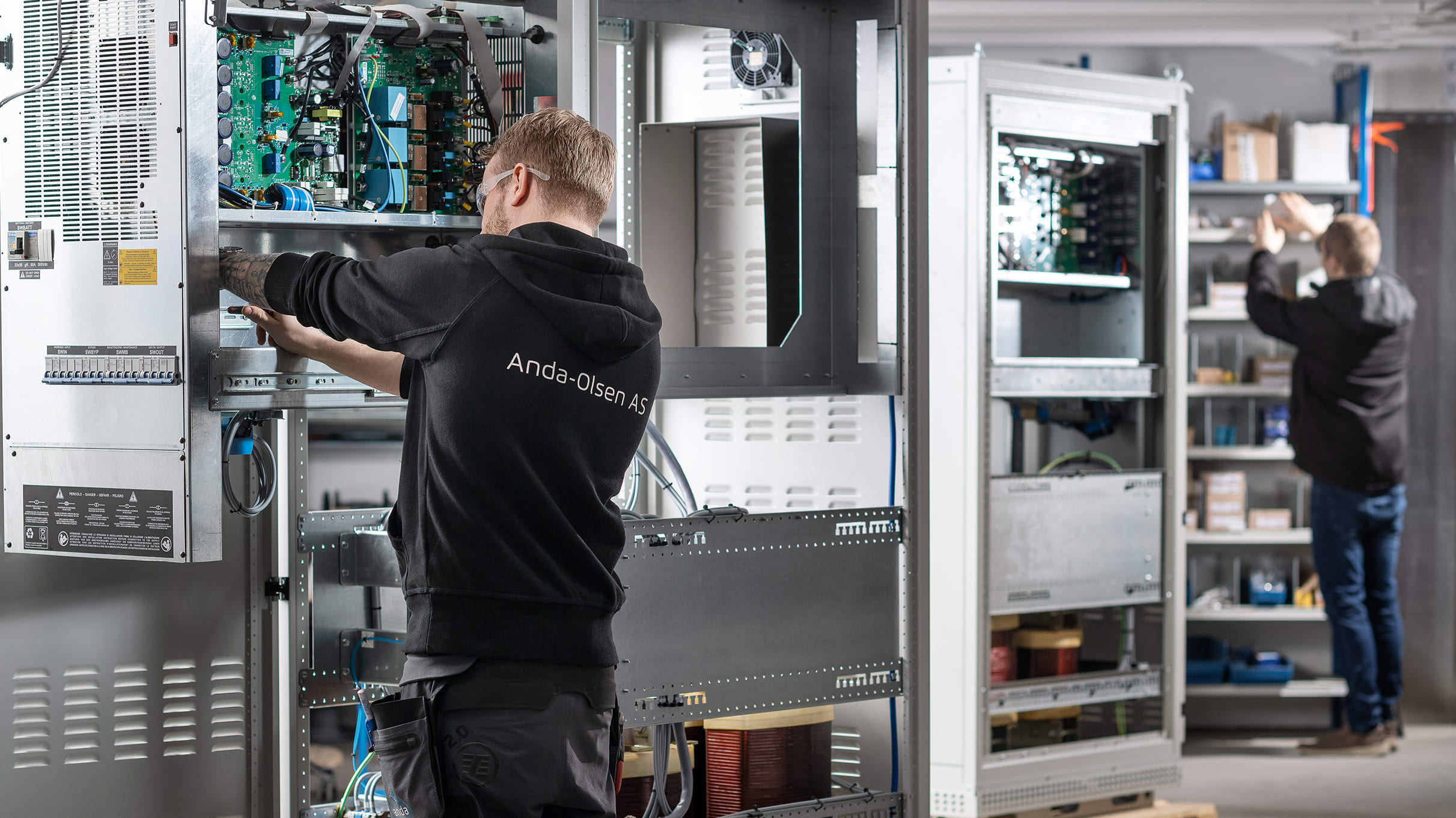
The interaction between UPS, installation and operation
Operational reliability is not determined by the UPS alone. It depends on how the UPS works together with the rest of the installation.
This includes:
- placement
- switchboards and distribution
- protection and selectivity
- cable routing
- battery solution
- monitoring
- service and maintenance
A compact solution can support better system interaction because multiple functions are combined and engineered as one complete solution. This provides a clearer overview and reduces the risk of important details being handled separately.
A robust system requires integrated engineering, not isolated component choices.
Documentation, classification and project execution
Maritime UPS solutions often have to be documented against requirements from classification societies, authorities and project specifications. Documentation is therefore an important part of the delivery.
Typical documentation may include:
- wiring diagrams
- load calculations
- technical specifications
- test protocols
- certificates
- classification documentation
When the solution is project-specific, the documentation must be project-specific as well.
Incomplete or fragmented documentation can lead to delays in approval, commissioning and handover.
Compact UPS systems from Anda Power Solutions
Anda-Olsen delivers compact UPS solutions under Anda Power Solutions for maritime installations where space, operational reliability and adaptation must be assessed together.
The delivery may include:
- single-phase UPS solutions
- three-phase UPS solutions
- DC systems
- battery solutions
- customised cabinets
- project-specific configurations
- adaptation of distribution, enclosure rating, voltage and backup time
- documentation in accordance with relevant project and classification requirements
This provides a solution adapted to the vessel’s actual needs, from engineering to installation and operation.
FAQ: Compact UPS solutions for ships
- What is a compact UPS solution for ships?
- A compact UPS solution for ships is a solution designed for limited space, easier installation and practical onboard operation. It is not only about size, but about how UPS, batteries, distribution, documentation and service requirements work together.
- Why is space important when installing UPS systems on ships?
- Space affects where the UPS can be installed, how much cabling is required, how batteries and distribution are integrated, and how easily the system can be maintained. Poor use of space can make the installation more complex and increase project costs.
- What is the advantage of an integrated all-in-one UPS solution?
- An integrated all-in-one UPS solution can combine UPS, batteries, distribution and relevant functions in one complete system. This can make installation easier, reduce the number of interfaces, reduce cabling and provide a better operational overview.
- Does the same UPS solution fit all ships?
- No. Ships differ in available space, load profile, backup time, environmental conditions, voltage, enclosure rating and documentation requirements. The UPS solution should therefore be adapted to each project.
- Why should UPS be considered early in the project?
- Early assessment makes it easier to plan placement, cabling, battery solution, documentation and service access. This can reduce the risk of costly changes later in the project.
- What makes Anda Power Solutions different from a more traditional UPS delivery?
- Anda Power Solutions is developed for demanding installations and can be adapted to project requirements for capacity, space, enclosure rating, distribution, voltage, cabinet design and documentation.
Contact Anda-Olsen for a technical review of compact UPS solutions for ships and maritime installations.